40% OFF
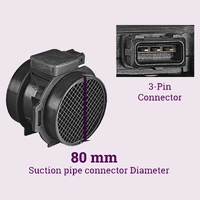
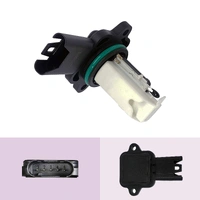
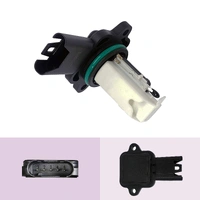
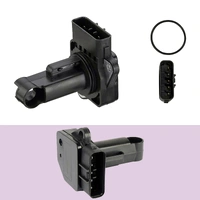
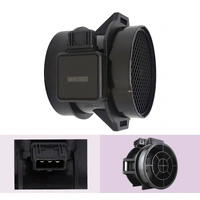
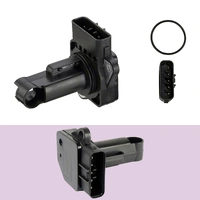
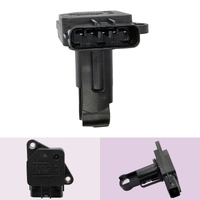
Air Flow Mass Meter Sensor Fits Citroen Jumper Peugeot Boxer 2.2 Hdi (
SKU: CAF118-Peugeot
$149.97 RRP $247.99
Save $98.02
Shop OEM replacement mass airflow sensors and air flow meters for Toyota, Holden, Ford, Mitsubishi, Nissan, Hyundai, Kia, BMW, Mazda and more. Matched to OEM specifications for accurate air measurement. Use the Vehicle Part Finder to confirm fitment.
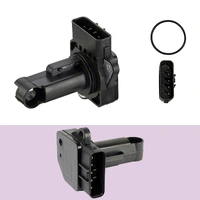
Air Flow Mass Meter Sensor Fits Citroen Jumper Peugeot Boxer 2.2 Hdi (
SKU: CAF118-Peugeot
$149.97 RRP $247.99
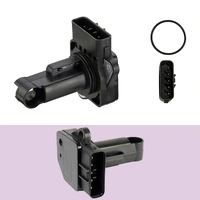
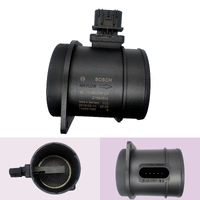
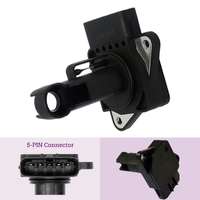
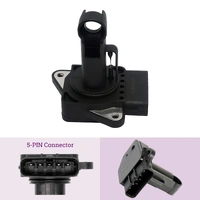
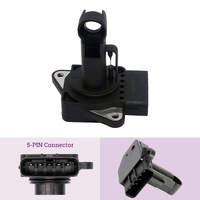
Air Flow Meter for Kia Carnival Hyundai Sonata 2.5L MAF Sensor Afm V6 KV6
SKU: CAF016-Carnival
$121.60 RRP $302.95
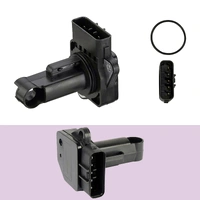
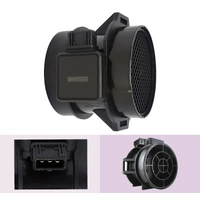
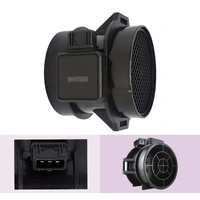
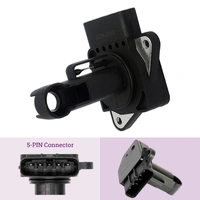
Airflow Sensor for BMW E60 E61 F10 (523i 525i 530i 528i) 03-13 N52 M54
SKU: AM97502NG-Series5
$149.97 RRP $369.97
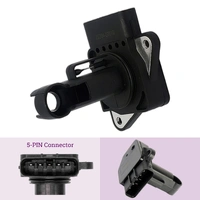
Airflow Sensor for BMW E82 E87 E88 (125i 130i ) 3.0L N52 B30 2005-13
SKU: AM97502NG-Series1
$149.97 RRP $369.97
$149.97 RRP $369.97
Airflow Sensor for BMW E90 E91 E92 E93 (320i 323i 325i 330i) N52 N53 2004-12
SKU: AM97502NG-Series3
$135.97 RRP $369.97
$149.97 RRP $369.97
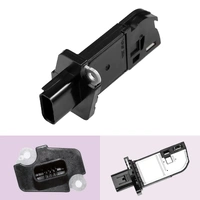
Airflow Sensor for Ford Escape BA Za Zb Zc Zd (3.0L Aj / 2.3L L3)
SKU: CAF034-Ford
$149.97 RRP $329.99
Airflow Sensor for Ford Laser Kn Kq 1.6L B6 Zm 1999-02 Air Mass Meter
SKU: CAF033-laser
$148.97 RRP $329.99
Airflow Sensor for Ford Ranger Everest Ua Mazda Bt-50 P4AT P5AT Diesel Engines
SKU: CAF118_0986280700
$149.97 RRP $247.99
Airflow Sensor for Ford Ranger PJ PK Diesel Afm MAF 2.5L 3.0L Weat Wlat
SKU: CAF033-Ranger
$148.97 RRP $329.99
Airflow Sensor for Holden VE 3.6L Afm-153 21994504 0280218177 0280218488 AM8177N
SKU: AFM153-0280218177
$247.97 RRP $459.99
$237.97 RRP $613.66
Airflow Sensor for Land Rover Defender TD5 Diesel L316 2.5L Discovery 2
SKU: CAF016-Defender
$121.60 RRP $302.95
Airflow Sensor for Land Rover Discovery 2 L318 Suv 2.5 TD5 4X4 1998-24
SKU: CAF016-Discovery
$116.97 RRP $302.95
Airflow Sensor for Land Rover Freelander Petrol L314 Suv 2.5 V6 4X4
SKU: CAF016-Freelander
$121.60 RRP $302.95
Airflow Sensor for Land Rover L319 L322 L320 L359 Range Rover Discovery
SKU: CAF034-LandRover
$137.97 RRP $329.99
$149.97 RRP $329.99
Airflow Sensor for Lexus GS300 GS450H IS250 RX350 (2GRFE 2GR-Fse 3GR 4GR) V6
SKU: CAF034-Lexus2
$149.97 RRP $329.99
Airflow Sensor for Mazda 2 3 6 Cx-7 Mx-5 Rx-8 Tribute Bt-50 WLS113215A
SKU: CAF033-Mazda6
$134.97 RRP $329.99
Airflow Sensor for Mazda Bt-50 UN Weat Wlat 2.5L 3.0L B2500 E2500
SKU: CAF033-Mazda
$148.97 RRP $329.99
Airflow Sensor for Suzuki Grand Vitara JB416 JB420 M16A J20A 05-15
SKU: CAF034-Suzuki
$149.97 RRP $329.99
Airflow Sensor for Suzuki Swift RS Zc M15A M16A 2005-11 Air Mass Meter
SKU: CAF034-SWIFT
$137.97 RRP $329.99
Airflow Sensor for Toyota Alphard 2003-14 2AZFE 1MZFE H20 H100 22204-22010
SKU: AMM9120-Alphard
$197.99 RRP $529.99
The mass airflow sensor (MAF sensor or air flow meter) measures the volume and density of air entering the engine and sends this data to the engine control unit (ECU). The ECU uses this information to calculate the correct amount of fuel to inject for efficient combustion. Without accurate airflow data, the ECU cannot maintain the correct air-fuel ratio - resulting in an engine that runs too rich or too lean. There are two common MAF sensor types: hot wire sensors (the most common in modern vehicles) and vane-type air flow meters found in older Japanese models.
A faulty or contaminated MAF sensor sends incorrect data to the ECU, causing a range of drivability problems. Common symptoms include:
MAF sensors can also suffer from contamination rather than outright failure - a dirty sensor from a poorly fitted aftermarket air filter can cause the same symptoms as a failed unit. Always check for contamination before replacing the sensor.
MAF sensors vary significantly between vehicles. Sensor type, housing diameter, connector configuration, and output signal type (frequency or voltage) all differ between makes and models. Fitting an incorrect sensor will produce inaccurate air readings and can cause the engine to run dangerously lean. Every sensor in our range is cross-referenced against OEM part numbers for an exact match. Use the Vehicle Part Finder or filter by make and model to confirm fitment before ordering.
SensorGal is a 100% Australian owned family business stocking aftermarket OEM replacement mass airflow sensors and air flow meters for Toyota, Holden, Ford, Mitsubishi, Nissan, Hyundai, Kia, BMW, Mazda, Subaru, Mercedes-Benz and Suzuki. With 82 sensors in stock covering a wide range of makes and models, we have one of the largest MAF sensor ranges available in Australia. Orders placed before 12 noon are dispatched same day from our Cranbourne VIC warehouse. All parts carry a 1-Year Australian warranty and our no-fuss returns policy.
Yes - if the sensor is contaminated rather than electrically failed, cleaning with a dedicated MAF sensor cleaner spray can restore correct readings. Do not use brake cleaner or generic electrical contact cleaner as these leave residue that damages the sensing wire. Allow the sensor to dry completely before reinstalling. If cleaning does not resolve the fault codes, the sensor requires replacement.
A MAF (Mass Air Flow) sensor directly measures the mass of air entering the engine using a hot wire element in the intake. A MAP (Manifold Absolute Pressure) sensor measures intake manifold pressure to calculate air density. Most modern engines use one or the other - some use both. Your vehicle service manual or OBD2 fault codes will confirm which sensor type your engine uses.
Yes. A faulty MAF sensor causes the ECU to miscalculate fuel delivery, typically resulting in a rich running condition that increases CO and hydrocarbon emissions. Most roadworthy and emissions checks will fail a vehicle with an active MAF sensor fault code or visibly excessive exhaust smoke.
Common symptoms include rough idle, hesitation or stumbling on acceleration, poor fuel economy, black smoke from the exhaust, and an illuminated Check Engine light. Your ECU may log fault codes P0100 to P0104.
You can drive short distances but it is not recommended. A faulty MAF sensor causes the ECU to run incorrect fuel mixtures, which can damage the catalytic converter and O2 sensors over time. Have it replaced as soon as possible.
Use an OBD2 scanner to check for fault codes P0100-P0104. You can also use a multimeter or live data scanner to check the sensor output voltage against your vehicle's specification. A reading significantly outside spec confirms a faulty sensor.
The most common causes are a dirty or contaminated sensing element (often from a missing or damaged air filter), oil contamination from an over-oiled aftermarket air filter, heat damage, or general wear over time.
It is good practice to clear any stored fault codes using an OBD2 scanner after replacement. Some vehicles will self-adapt within a short drive cycle, but clearing codes ensures the ECU recalibrates from a clean baseline.