59% OFF
$69.99 RRP $169.97
Save $99.98
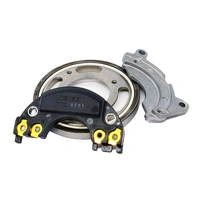
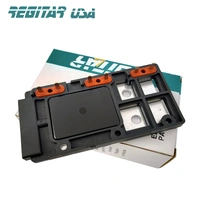
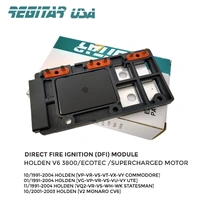
Shop OEM replacement direct fire ignition (DFI) modules for Toyota, Holden, Ford, Mitsubishi, Nissan and more. Matched to OEM specifications for correct spark timing. Use the Vehicle Part Finder to confirm fitment.
$69.99 RRP $169.97
$237.45 RRP $347.99
$186.98 RRP $350.97
$186.98 RRP $350.97
The direct fire ignition (DFI) module, also called a distributorless ignition module, controls spark timing without a traditional distributor. It receives signals from the crankshaft and camshaft position sensors and triggers the ignition coils to fire in the correct sequence. DFI systems provide more precise ignition timing than distributor-based systems, improving fuel efficiency and reducing emissions.
A faulty DFI module can affect one or multiple cylinders depending on the failure mode. Common symptoms include:
DFI modules are highly specific to vehicle application. The number of coil outputs, connector type, trigger signal type, and mounting configuration all vary between makes and models. Every module in our range is cross-referenced against OEM part numbers for an exact fit. Use the Vehicle Part Finder to confirm the correct part before ordering.
SensorGal is a 100% Australian owned family business stocking aftermarket OEM replacement ignition modules for Toyota, Holden, Ford, Mitsubishi, Nissan, Hyundai and more. Orders placed before 12 noon are dispatched same day from our Cranbourne VIC warehouse via express post. All parts carry a 1-Year Australian warranty and our no-fuss returns policy.
The direct fire ignition (DFI) module, also called a distributorless ignition module, controls spark timing without a traditional distributor. It receives position signals from the crankshaft and camshaft sensors and triggers each ignition coil to fire in the correct sequence for each cylinder. DFI systems deliver more precise timing than distributor-based systems and are not subject to the mechanical wear of a distributor cap and rotor.
A failing DFI module typically causes misfires on one or more cylinders depending on how many coil outputs are affected. Common symptoms include engine cranking but not starting due to no spark, cylinder-specific misfires with codes P0300 to P0312, rough idle, hesitation under acceleration, and intermittent stalling particularly when the engine is at operating temperature. Some modules fail completely when hot and recover when cool - a pattern that strongly suggests ignition module failure.
The most reliable test is to scan for fault codes and check for spark at each cylinder using an inline spark tester. If specific cylinders have no spark while others do, the module output for those cylinders has failed. You can also swap the module with a known good unit. Some modules can be tested with a multimeter by checking trigger signal voltage at the module input terminals while cranking - refer to a workshop manual for your specific vehicle.
Yes - if the DFI module fails completely it will produce no spark to any cylinder and the engine will crank but not start. This is one of the more common causes of a no-crank-no-spark no-start on vehicles without a traditional distributor. An OBD2 scanner may show crankshaft or camshaft sensor codes in addition to ignition module faults, since the module relies on sensor inputs to determine timing.
Yes - DFI module, ignition control module (ICM), and ignition module are different names for the same component depending on the manufacturer. Holden and some Ford applications use the term DFI module, while other manufacturers call it an ICM or ignition amplifier. The function is identical - controlling coil triggering based on crankshaft and camshaft position sensor signals.
Clear any stored fault codes with an OBD2 scanner after replacement. On most vehicles no further reset is required - the module is a direct replacement with no programming. However if misfire codes were stored for an extended period the ECU may have modified fuel trim values as a result of the misfires. These will self-correct over several drive cycles once the new module is installed and the engine is running correctly.