33% OFF
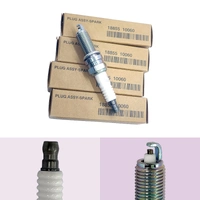
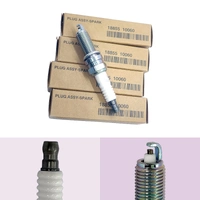
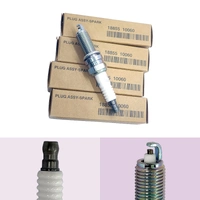
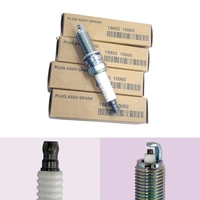
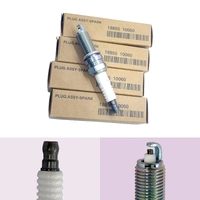
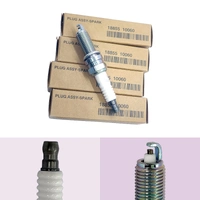
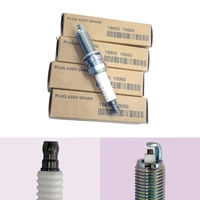
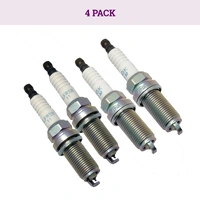
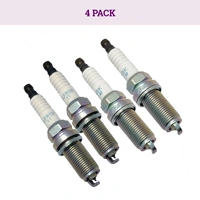
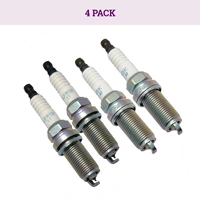
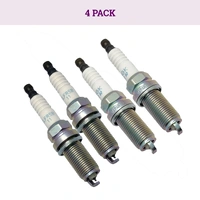
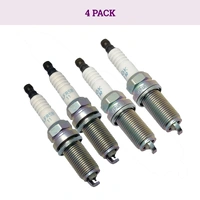
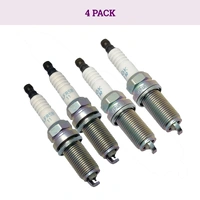
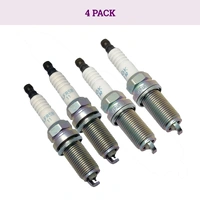
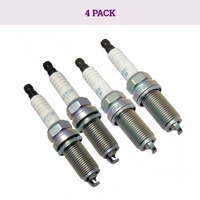
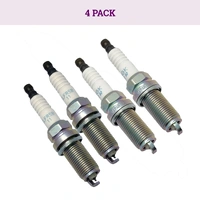
4 Pack Spark Plug for Hyundai Accent RB 1.6L G4FC 2010-19 90kW 18855-10060
SKU: 1885510060-Accent
$60.00 RRP $90.00
Save $30.00
Shop OEM replacement spark plugs for Toyota, Holden, Ford, Mitsubishi, Nissan, Hyundai, Kia, BMW, Mazda and more. Matched to OEM heat range and electrode specifications. Use the Vehicle Part Finder to confirm fitment.
4 Pack Spark Plug for Hyundai Accent RB 1.6L G4FC 2010-19 90kW 18855-10060
SKU: 1885510060-Accent
$60.00 RRP $90.00
4 Pack Spark Plug for Hyundai Elantra MD UD 1.8L 4cyl G4NB 110kW up to 2011
SKU: 1885510060-Elantra
$60.00 RRP $90.00
4 Pack Spark Plug for Hyundai i30 FD PD i20 PB Venue QX 1.6L G4FC
SKU: 1885510060-i30
$60.00 RRP $90.00
4 Pack Spark Plug for Hyundai Kia 18855-10060 LZKR6B-10E XUH22TT
SKU: 1885510060-4PACK
$60.00 RRP $90.00
4 Pack Spark Plug for Kia Rio UB 1.4L G4FA Soul AM 1.6L G4FC 2011-15
SKU: 1885510060-Rio
$60.00 RRP $90.00
4 Pack Spark Plug for Smart ForTwo 454 451 M122 M132 2005-15 1.5L 1.0L
SKU: 1885510060-Smart
$60.00 RRP $90.00
4 Pack Spark Plug for Ssangyong Korando CK 2.0L G20 Tivoli SUV 1.6L G16DF
SKU: 1885510060-Ssangyong
$60.00 RRP $90.00
Set of 4 Spark Plugs Citroen Peugeot Smart TU5JP4 18840-11051
SKU: 1884011051-4PACK
$162.97 RRP $220.00
Set of 4 Spark Plugs Honda Civic Hybrid Insight LDA1 LDA2 ECA1
SKU: 1884011051-4PACK-Honda
$162.97 RRP $220.00
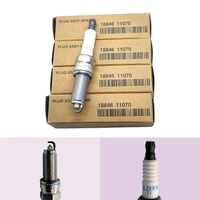
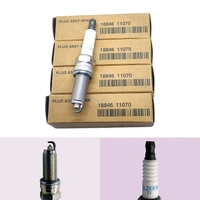
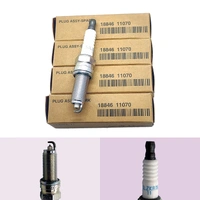
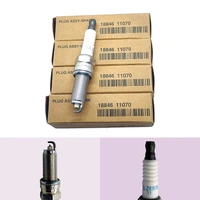
Set of 4 Spark Plugs Hyundai Accent Elantra i30 i40 i45 ix35 Kona Santa Fe
SKU: 1884611070-4pack
$175.99 RRP $220.00
Set of 4 Spark Plugs Hyundai iLoad iMax Sonata i45 ix35 G4KD G4KC G4KE
SKU: 1884011051-4PACK-Hyundai
$162.97 RRP $220.00
Set of 4 Spark Plugs Kia Cerato Optima Rio Rondo Seltos Sorento Soul Sportage
SKU: 1884611070-Kia
$175.99 RRP $220.00
Set of 4 Spark Plugs Kia Cerato TD Sorento XM Sportage SL G4KD G4KE
SKU: 1884011051-4PACK-Kia
$162.97 RRP $220.00
Set of 4 Spark Plugs Lexus ES NX RX 300h 270 2AR-FXE 1AR-FE
SKU: 1884011051-4PACK-Lexus
$162.97 RRP $220.00
Set of 4 Spark Plugs Mitsubishi Colt Mirage Grandis 4A91 4G15 3A92
SKU: 1884011051-4PACK-Mitsubis
$162.97 RRP $220.00
Set of 4 Spark Plugs Nissan X-Trail Pulsar Cube Micra Note Primera
SKU: 1884011051-4PACK-Nissan
$162.97 RRP $220.00
Set of 4 Spark Plugs Ssangyong Korando CK Tivoli 1.6L 2.0L 18846-11070
SKU: 1884611070-Ssangyong
$175.99 RRP $220.00
Set of 4 Spark Plugs Subaru Forester Liberty Impreza WRX EJ20 EJ25
SKU: 1884011051-4PACK-Subaru
$162.97 RRP $220.00
Set of 4 Spark Plugs Suzuki Ignis Swift 1.2L K12C 18846-11070
SKU: 1884611070-Suzuki
$175.99 RRP $220.00
Set of 4 Spark Plugs Suzuki SX4 2.0L J20A 18840-11051
SKU: 1884011051-4PACK-Suzuki
$162.97 RRP $220.00
Set of 4 Spark Plugs Toyota Camry Hiace Hilux Prado Yaris 2AR-FE 2TR-FE
SKU: 1884011051-4PACK-Toyota
$162.97 RRP $220.00
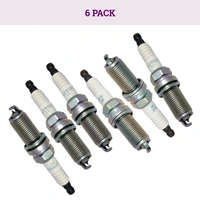
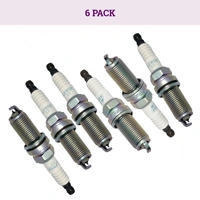
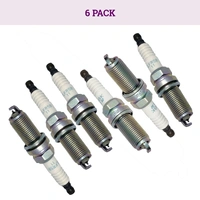
Set of 6 Spark Plugs Citroen Ford Peugeot Renault Volvo V6 18840-11051
SKU: 1884011051-6PACK
$219.00 RRP $330.00
Set of 6 Spark Plugs Land Rover Freelander 2 L359 3.2L V6 18840-11051
SKU: 1884011051-6PACK-Land
$219.00 RRP $330.00
Set of 6 Spark Plugs Subaru Liberty Outback Tribeca EZ30 EZ36 Flat6
SKU: 1884011051-6PACK-Subaru
$219.00 RRP $330.00
The spark plug ignites the compressed air-fuel mixture inside the combustion chamber, converting chemical energy into the mechanical force that drives the engine. Each cylinder fires thousands of times per minute - and the spark plug must deliver a reliable, correctly timed spark under extreme pressure and temperature for the life of the engine. Spark plugs also transfer combustion heat away from the chamber to the cylinder head via the thread and shell.
Spark plugs wear gradually, so symptoms often develop slowly before becoming obvious. Common signs include:
Spark plugs vary in thread size, reach, heat range, electrode type (copper, iridium, platinum), and gap specification between makes, models, and engine variants. Fitting a plug with the wrong heat range can cause pre-ignition or fouling. Every plug in our range is matched to OEM specifications for your specific engine. Use the Vehicle Part Finder to confirm the correct plug before ordering.
SensorGal is a 100% Australian owned family business stocking aftermarket OEM replacement spark plugs for Toyota, Holden, Ford, Mitsubishi, Nissan, Hyundai, Kia, BMW, Mazda, Subaru, Mercedes-Benz and Suzuki. Orders placed before 12 noon are dispatched same day from our Cranbourne VIC warehouse via express post. All parts carry a 1-Year Australian warranty and our no-fuss returns policy.
Ignition leads (also called spark plug wires or HT leads) carry the high-voltage charge from the ignition coil or distributor cap to the spark plug. The spark plug then uses that charge to create the spark that ignites the air-fuel mixture inside the combustion chamber. They are separate components - leads can fail independently from plugs and vice versa. Coil-on-plug (COP) engines do not use ignition leads as each coil sits directly on its spark plug.
Common signs of worn or failing leads include visible arcing or sparking from the lead insulation in the dark, misfires that move between cylinders when you swap leads, and cracked or oil-soaked insulation visible on inspection. Worn spark plugs typically cause hard starting, rough idle, misfires under load, and increased fuel consumption. An OBD2 scanner showing cylinder-specific misfire codes will help identify which cylinder is affected, guiding diagnosis of both components.
Spark plug service intervals vary by plug type - standard copper plugs typically last 30,000 to 40,000 km, while iridium and platinum plugs can last 80,000 to 100,000 km depending on the vehicle. Ignition leads generally last 60,000 to 100,000 km but should be inspected at every major service for cracking or damage. Both components should be replaced together when one has worn to service limit, as the labour to access them is often the same.
It is best practice to replace all spark plugs as a set. Plugs wear at similar rates and mixing old and new plugs creates inconsistent combustion across cylinders. Ignition leads should also be replaced as a set - individual leads are difficult to source for most vehicles and worn leads from the same set will fail soon after. The cost difference between replacing one and replacing all is small compared to the labour of a repeat service.
Yes. Misfires caused by worn plugs or failing leads send unburnt fuel into the exhaust system. This unburnt fuel overheats the catalytic converter and can cause permanent damage - a costly secondary repair. Extended misfiring can also foul oxygen sensors and contaminate engine oil with fuel wash-down. Replacing plugs and leads at their service interval is significantly cheaper than replacing a catalytic converter.
Most aftermarket OEM replacement spark plugs are pre-gapped to the standard specification for the intended application and do not require adjustment. However always verify the gap against your vehicle service manual using a feeler gauge before installation - particularly on iridium and platinum plugs where the electrode is fragile and must not be adjusted with a coin or flat tool. If the gap is incorrect use a proper spark plug gap tool and adjust only the ground electrode, never the centre electrode.