4% OFF
$65.99 RRP $68.95
Save $2.96
Shop OEM replacement throttle position sensors for Toyota, Holden, Ford, Mitsubishi, Nissan, Hyundai, Kia, BMW, Mazda and more. Matched to OEM specifications for accurate throttle response. Use the Vehicle Part Finder to confirm fitment.
$65.99 RRP $68.95
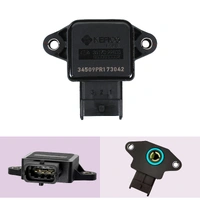
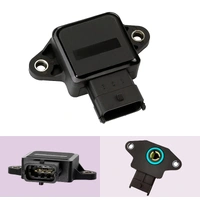
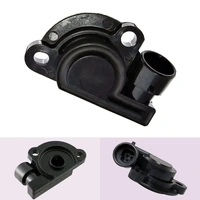
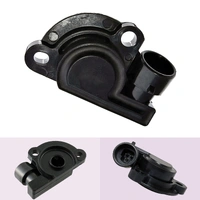
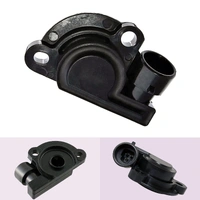
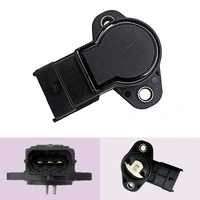
Throttle Position Sensor for Hyundai Tucson JM Tiburon GK G4GC 2.0L 35170-22600
SKU: 3517022600-Tucson
$84.45 RRP $145.95
$90.10 RRP $100.95
$90.10 RRP $100.95
$86.97 RRP $100.95
$49.97 RRP $93.95
$88.97 RRP $112.95
$98.71 RRP $112.95
$98.71 RRP $112.95
$66.97 RRP $109.95
$59.97 RRP $109.95
$66.97 RRP $109.95
$65.99 RRP $68.95
$66.97 RRP $109.95
$49.97 RRP $93.95
$65.99 RRP $68.95
$49.97 RRP $93.95
$49.97 RRP $93.95
$49.97 RRP $93.95
$49.97 RRP $93.95
$65.99 RRP $68.95
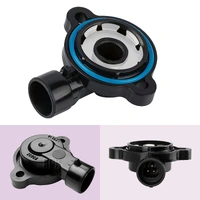
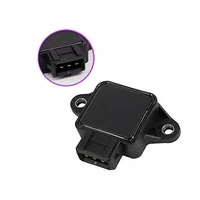
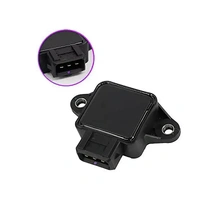
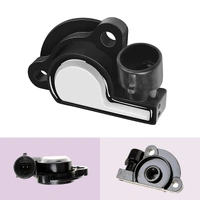
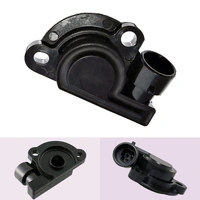
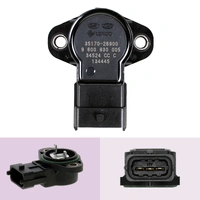
Throttle Position Sensor for Hyundai Accent Getz Elantra Kia Cerato 3517022600
SKU: 3517022600-CTPS108
$84.45 RRP $145.95
$122.42 RRP $178.42
$149.97 RRP $189.95
The throttle position sensor (TPS) monitors the angle of the throttle plate inside the throttle body and sends this data to the engine control unit (ECU). The ECU uses this information to determine how much fuel to inject, when to change gear in automatic transmissions, and how to manage idle speed and engine load. The TPS is one of the most referenced sensors in the engine management system - the ECU reads it constantly to translate driver inputs into precise fuel and ignition responses. On drive-by-wire (electronic throttle) vehicles the TPS is integrated into the throttle body assembly.
A faulty TPS sends incorrect throttle angle data to the ECU, causing a range of drivability problems. Common symptoms include:
A worn TPS can also cause intermittent symptoms that are difficult to diagnose - the sensor may read correctly at rest but produce dropouts at certain throttle angles due to worn resistive tracks.
Throttle position sensors vary in connector type, resistance range, output voltage, and mounting configuration between makes, models, and throttle body types. Fitting an incorrect TPS will produce inaccurate throttle readings and may cause the ECU to enter limp mode to protect the engine. Every sensor in our range is cross-referenced against OEM part numbers for an exact fit. Use the Vehicle Part Finder or filter by make and model to confirm the correct part before ordering.
SensorGal is a 100% Australian owned family business stocking aftermarket OEM replacement throttle position sensors for Toyota, Holden, Ford, Mitsubishi, Nissan, Hyundai, Kia, BMW, Mazda, Subaru, Mercedes-Benz and Suzuki. Orders placed before 12 noon are dispatched same day from our Cranbourne VIC warehouse via express post. All parts carry a 1-Year Australian warranty and our no-fuss returns policy.
A faulty throttle position sensor typically triggers codes P0120 to P0124. P0120 and P0121 indicate the TPS signal is out of range, P0122 and P0123 indicate the signal is too low or too high, and P0124 indicates an intermittent signal. On drive-by-wire vehicles additional codes related to the electronic throttle control system may also be present.
Yes. The ECU shares throttle position data with the transmission control module to determine when to upshift and downshift. A faulty TPS sending incorrect throttle angle data can cause erratic shift points, harsh gear changes, the transmission hunting between gears, or the vehicle remaining in a fixed gear. Replacing the TPS often resolves transmission behaviour issues that appear unrelated.
It depends on how severely the sensor has failed. A partially failed TPS may cause hesitation and poor throttle response but the vehicle remains driveable. A fully failed TPS on a drive-by-wire vehicle can trigger limp mode, restricting the engine to a fixed low throttle position to prevent runaway acceleration. In either case replace the sensor as soon as possible as the fault can worsen without warning.
Symptoms include jerky or hesitant acceleration, rough idle, unexpected surging, poor throttle response, stalling, and fault codes P0120-P0124. Drive-by-wire vehicles may also enter a limp mode limiting engine power.
TPS sensors are sealed units and cannot be cleaned or adjusted reliably. If the sensor is producing erratic signals or fault codes, replacement is the correct solution. Attempting to clean or adjust it usually results in continued faults.
Many vehicles require a TPS calibration or throttle body relearn procedure after replacement. This is usually done with an OBD2 scanner or by following a specific ignition on/off sequence. Check your vehicle's service manual or contact us for guidance.