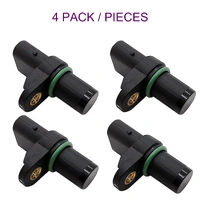
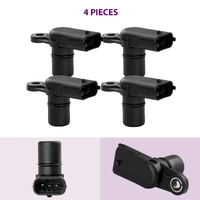
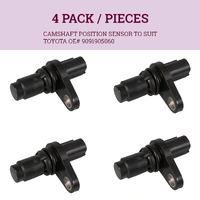
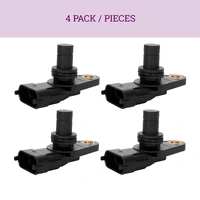
44% OFF
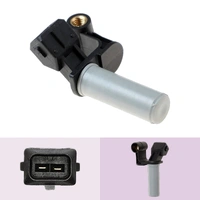
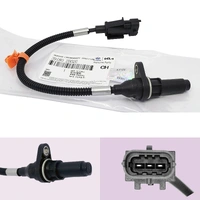
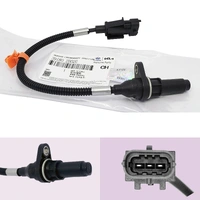
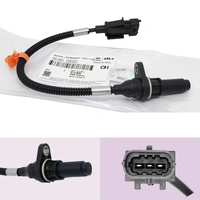
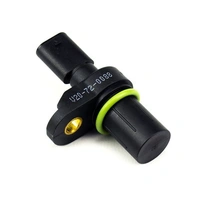
Cam Angle Sensor for Suzuki Swift S-Cross Liana M15A M16A 1.5L 1.6L
SKU: CSCA422-3310065D00_1
$69.97 RRP $123.99
Save $54.02
Shop OEM replacement camshaft and crankshaft position sensors for Toyota, Holden, Ford, Mitsubishi, Nissan, Hyundai, Kia, BMW, Mazda and more. Matched to OEM specifications for precise ignition timing. Use the Vehicle Part Finder to confirm fitment.
Cam Angle Sensor for Suzuki Swift S-Cross Liana M15A M16A 1.5L 1.6L
SKU: CSCA422-3310065D00_1
$69.97 RRP $123.99
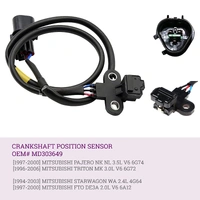
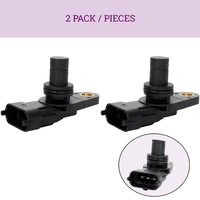
Crank & Cam Sensor Pair for Mitsubishi Triton Pajero MD303649 MD320622
SKU: CSCA37-CSCA110-Pair
$187.42 RRP $0.00
$52.99 RRP $160.00
$89.97 RRP $128.00
$93.45 RRP $247.99
$89.97 RRP $247.99
$135.97 RRP $169.99
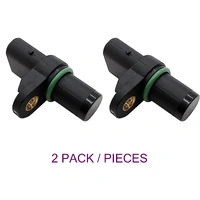
2 Pack Camshaft Sensor BMW 320i 325i 520i 525i X1 X3 12147518628
SKU: CSCA122_2PACK
$149.00 RRP $290.00
$169.97 RRP $231.30
2 X Camshaft Position Sensor for Hyundai Kia 2.0L 39350-23910 Intake & Exhaust
SKU: 3935023910-Pair
$167.97 RRP $257.19
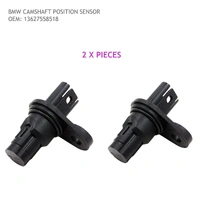
2X Camshaft Position Sensor for BMW 3 5 7 X1 X3 X4 X5 X6 Z4 13627558518
SKU: CSCA391-2PACK
$233.68 RRP $349.00
33220-63J00 Cam or Crank Angle Sensor for Suzuki Vitara Grand Vitara 2003-20
SKU: CSCA149-Vitara
$62.97 RRP $127.97
$165.97 RRP $165.97
$165.97 RRP $165.97
391802B020 Crankshaft Sensor for Kia Soul Rio Pro Ceed Sportage Rondo
SKU: 391802B020-1
$165.97 RRP $165.97
$112.97 RRP $223.95
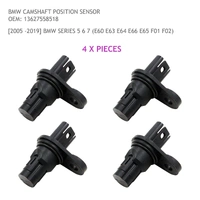
4 Pack Camshaft Position Sensor for BMW 5 6 7 X5 X6 V8 V12 13627558518
SKU: CSCA391-4PACK
$442.00 RRP $650.00
4 Pack Camshaft Sensor BMW 740i 750i X5 X6 650i 12147518628
SKU: CSCA122_4PACK
$250.00 RRP $400.00
$207.97 RRP $379.00
$326.97 RRP $436.05
$236.97 RRP $359.88
$117.60 RRP $131.95
$103.95 RRP $132.00
$110.97 RRP $131.95
The crankshaft position sensor (CKP sensor) monitors the rotational speed and position of the crankshaft and sends this data to the engine control unit (ECU). The ECU uses this information to control fuel injection timing and ignition timing. The camshaft position sensor (CMP sensor) works alongside the crankshaft sensor to identify which cylinder is on its compression stroke, allowing the ECU to deliver sequential fuel injection. Together these two sensors form the foundation of your engine's ignition and fuel management system. A failure in either sensor can prevent the engine from starting at all.
Because these sensors are critical to ignition and fuel delivery, symptoms of failure are often severe and immediate. Common signs include:
Crankshaft sensor failures can also prevent the ECU from registering engine speed, which may cause the instrument cluster to show zero RPM even while cranking.
Cam and crank sensors vary in sensor technology (Hall effect vs inductive), connector type, mounting configuration, and signal output between makes and models. Fitting an incorrect sensor type will produce incorrect timing signals and can prevent the engine from starting. Every sensor in our range is cross-referenced against OEM part numbers for an exact match. With 293 sensors in stock we cover a wide range of Australian vehicles. Use the Vehicle Part Finder or filter by make and model to confirm the correct part.
SensorGal is a 100% Australian owned family business stocking aftermarket OEM replacement camshaft and crankshaft position sensors for Toyota, Holden, Ford, Mitsubishi, Nissan, Hyundai, Kia, BMW, Mazda, Subaru, Mercedes-Benz and Suzuki. Orders placed before 12 noon are dispatched same day from our Cranbourne VIC warehouse via express post. All parts carry a 1-Year Australian warranty and our no-fuss returns policy.
Use an OBD2 scanner to check for fault codes P0335 to P0338 (crankshaft) or P0340 to P0349 (camshaft). You can also test the sensor with a multimeter - inductive sensors should show resistance between 200 and 1,000 ohms, while Hall effect sensors require a live voltage test with the engine cranking. Erratic or absent RPM signal on a live data scanner is a strong indicator of sensor failure.
Yes. A faulty crankshaft position sensor in particular can cause the ECU to lose engine speed and position data entirely, which may trigger limp mode or prevent the engine from starting. A faulty camshaft sensor on variable valve timing engines can cause the VVT system to default to a fixed position, significantly reducing power and fuel economy.
In most cases no - aftermarket OEM replacement sensors are direct plug-in replacements that require no programming. However some vehicles, particularly late model European makes including BMW and Mercedes-Benz, may require a crankshaft adaptation reset using a dealer-level scan tool after replacement. Check your vehicle service information before replacing the sensor.
Symptoms include intermittent stalling, engine not starting, rough idle, misfires, and a Check Engine light with codes P0335-P0338. In severe cases the engine will crank but not start as the ECU cannot determine crank position for ignition timing.
Symptoms include poor performance, misfires, difficulty starting, rough idle, and fault codes P0340-P0343. Variable valve timing systems (VVT) will also be affected, causing sluggish response and increased fuel consumption.
If the sensor has failed completely the engine will not start or will stall and not restart. If it is intermittently failing, driving is dangerous - the engine can cut out without warning. Replace it immediately.
Not necessarily - replace whichever has failed based on fault codes and diagnosis. However, if your vehicle has high kilometres and one has failed, it is worth considering replacing both as they are similar in age and condition.