49% OFF

Ignition Starter Switch suitable for Kia Rio Picanto Repl 931101R000
SKU: 93110-1R000-KIA
$59.97 RRP $117.00
Save $57.03
Shop Ignition System parts at SensorGal. OEM-fit coils, plugs & switches restore smooth starts, fuel efficiency & reliable performance.
Ignition Starter Switch suitable for Kia Rio Picanto Repl 931101R000
SKU: 93110-1R000-KIA
$59.97 RRP $117.00
$79.97 RRP $117.00
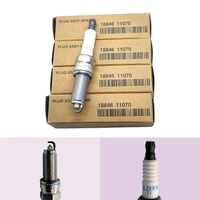
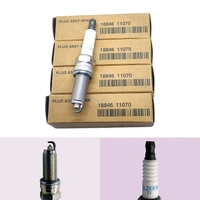
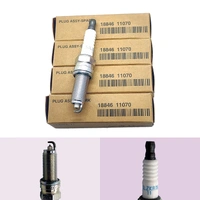
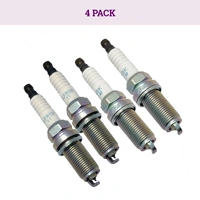
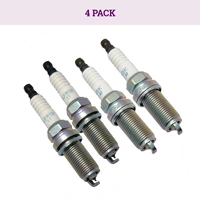
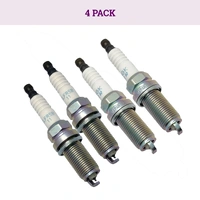
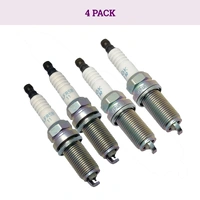
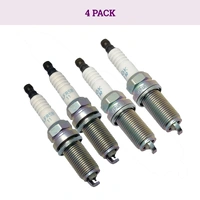
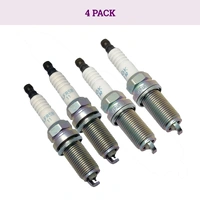
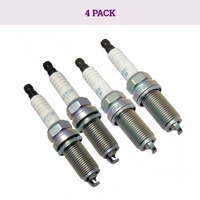
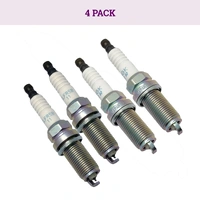
4 Pack Spark Plug for Hyundai Accent Elantra i30 i40 i45 ix35 Kona Santa-Fe Sona
SKU: 1884611070-4pack
$175.99 RRP $220.00
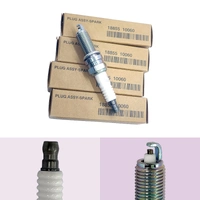
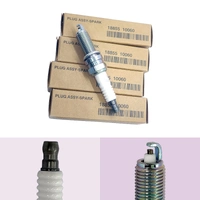
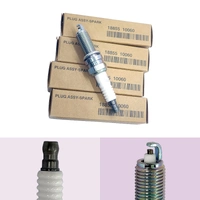
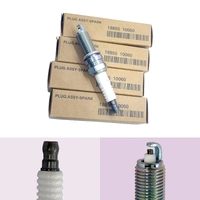
4 Pack Spark Plug for Hyundai Accent RB 1.6L G4FC 2010-19 90kW
SKU: 1885510060-Accent
$60.00 RRP $90.00
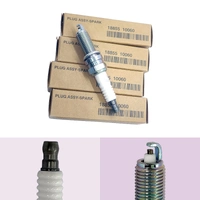
4 Pack Spark Plug for Hyundai Elantra Md Ud 1.8L 4CYL G4NB 110kW Upto 2011
SKU: 1885510060-Elantra
$60.00 RRP $90.00
4 Pack Spark Plug for Hyundai i30 FD PD i20 PB Venue QX 1.6L G4FC Check
SKU: 1885510060-i30
$60.00 RRP $90.00
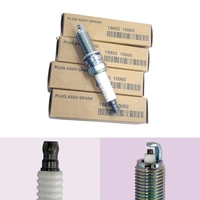
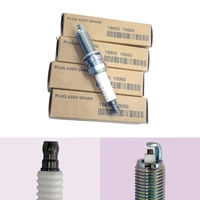
4 Pack Spark Plug for Hyundai Kia 18855-10060 1885510060 LZKR6B-10E XUH22TT 0242
SKU: 1885510060-4PACK
$60.00 RRP $90.00
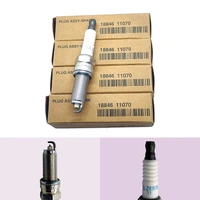
4 Pack Spark Plug for Kia Cerato BD YD Optima Rio Rondo Sorento Soul Sportage
SKU: 1884611070-Kia
$175.99 RRP $220.00
4 Pack Spark Plug for Kia Rio UB 1.4L G4FA Soul AM 1.6L G4FC 2011-15
SKU: 1885510060-Rio
$60.00 RRP $90.00
4 Pack Spark Plug for Smart ForTwo 454 451 M122 M132 2005-15 1.5L 1.0L
SKU: 1885510060-Smart
$60.00 RRP $90.00
4 Pack Spark Plug for Ssangyong Korando CK 2.0L G20 2012-16
SKU: 1884611070-Ssangyong
$175.99 RRP $220.00
4 Pack Spark Plug for Ssangyong Korando CK 2.0L G20 Tivoli SUV 1.6L G16DF
SKU: 1885510060-Ssangyong
$60.00 RRP $90.00
4 Pack Spark Plug for Suzuki Ignis Swift 1.2L K12C 2016-ON SILZKR7B11 9023
SKU: 1884611070-Suzuki
$175.99 RRP $220.00
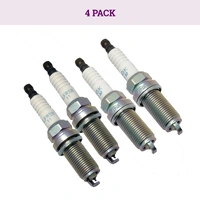
4 Pack Spark Plug to Replace 18840-11051 Ngk ILFR5B11 9006 REC10WYPB4 IKH16TT
SKU: 1884011051-4PACK
$162.97 RRP $220.00
4PACK Spark Plug for Honda Civic Ed FD LDA1 LDA2 1.3L 2004-12
SKU: 1884011051-4PACK-Honda
$162.97 RRP $220.00
4PACK Spark Plug for Hyundai Iload Imax Tq 2.4L i45 Yf ix35 Lm G4KD G4KC G4KE
SKU: 1884011051-4PACK-Hyundai
$162.97 RRP $220.00
4PACK Spark Plug for Kia Cerato Td Sorento Xm Sportage SL G4KD G4KC 2.0L 2.4L
SKU: 1884011051-4PACK-Kia
$162.97 RRP $220.00
4PACK Spark Plug for Lexus Es Nx 300H 2AR-Fxe 2.5L RX270 2.7L 2008-0N
SKU: 1884011051-4PACK-Lexus
$162.97 RRP $220.00
4PACK Spark Plug for Mitsubishi Colt Z23 1.5L 2004-12 4G15
SKU: 1884011051-4PACK-Mitsubis
$162.97 RRP $220.00
4PACK Spark Plug for Nissan X-Trail T30 Pulsar N16 Cube Micra Note
SKU: 1884011051-4PACK-Nissan
$162.97 RRP $220.00
4PACK Spark Plug for Subaru Forester Liberty Impreza EJ20 EJ25 2000-13
SKU: 1884011051-4PACK-Subaru
$162.97 RRP $220.00
4PACK Spark Plug for Suzuki SX4 J20A S-Cross M16A 1.6L 2.0L 2006-16
SKU: 1884011051-4PACK-Suzuki
$162.97 RRP $220.00
4PACK Spark Plug for Toyota 2ARFE 2TRFE Hiace Trh Hilux Tgn Camry Prado
SKU: 1884011051-4PACK-Toyota
$162.97 RRP $220.00
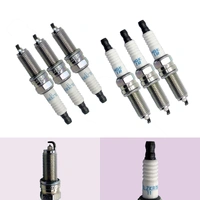
6 Pack Spark Plug for Hyundai Kia 18846-11070 SILZKR7B11 9023 RER10WMPB4
SKU: 1884611070-6PACK
$210.00 RRP $340.00
Keep your vehicle starting reliably with SensorGal’s Ignition System parts. From starter switches to coils and spark plugs, our ignition range ensures your engine fires up smoothly, delivers consistent power, and maintains fuel efficiency.
A failing ignition component can lead to misfires, poor fuel economy, or complete no-start conditions. Replacing them with OEM-fit parts restores confidence in your vehicle’s performance.
At SensorGal, we supply trusted ignition parts for popular makes and models across Australia, backed by fast shipping, easy returns, and expert support.
Q: What does the ignition system do?
A: It provides the spark needed to ignite the air-fuel mixture, powering the engine.
Q: What are signs of ignition system failure?
A: Misfires, stalling, rough idle, loss of power, or a car that won’t start.
Q: Why choose OEM-fit ignition parts?
A: They ensure reliable spark delivery, correct fit, and compatibility with your vehicle’s ECU.
A failing crank angle sensor causes ignition timing to be incorrect or absent, resulting in misfires, hard starting, rough idle, stalling, or a no-start condition. Fault codes P0335-P0338 are commonly associated with this fault.
Ignition leads typically last 60,000-100,000 km depending on the vehicle and operating conditions. Signs of worn leads include misfires, rough idle, poor fuel economy, and visible cracking or carbon tracking on the lead insulation.
A coil pack serves multiple cylinders from one unit via ignition leads. Coil-on-plug (COP) ignition has one individual coil per cylinder sitting directly on the spark plug. COP systems are more common on modern vehicles and generally provide stronger, more precise spark.
Yes. A misfiring cylinder caused by a faulty ignition coil sends unburnt fuel into the exhaust, which can overheat and damage the catalytic converter. If you have a misfire fault code, address it promptly to protect your catalytic converter.