
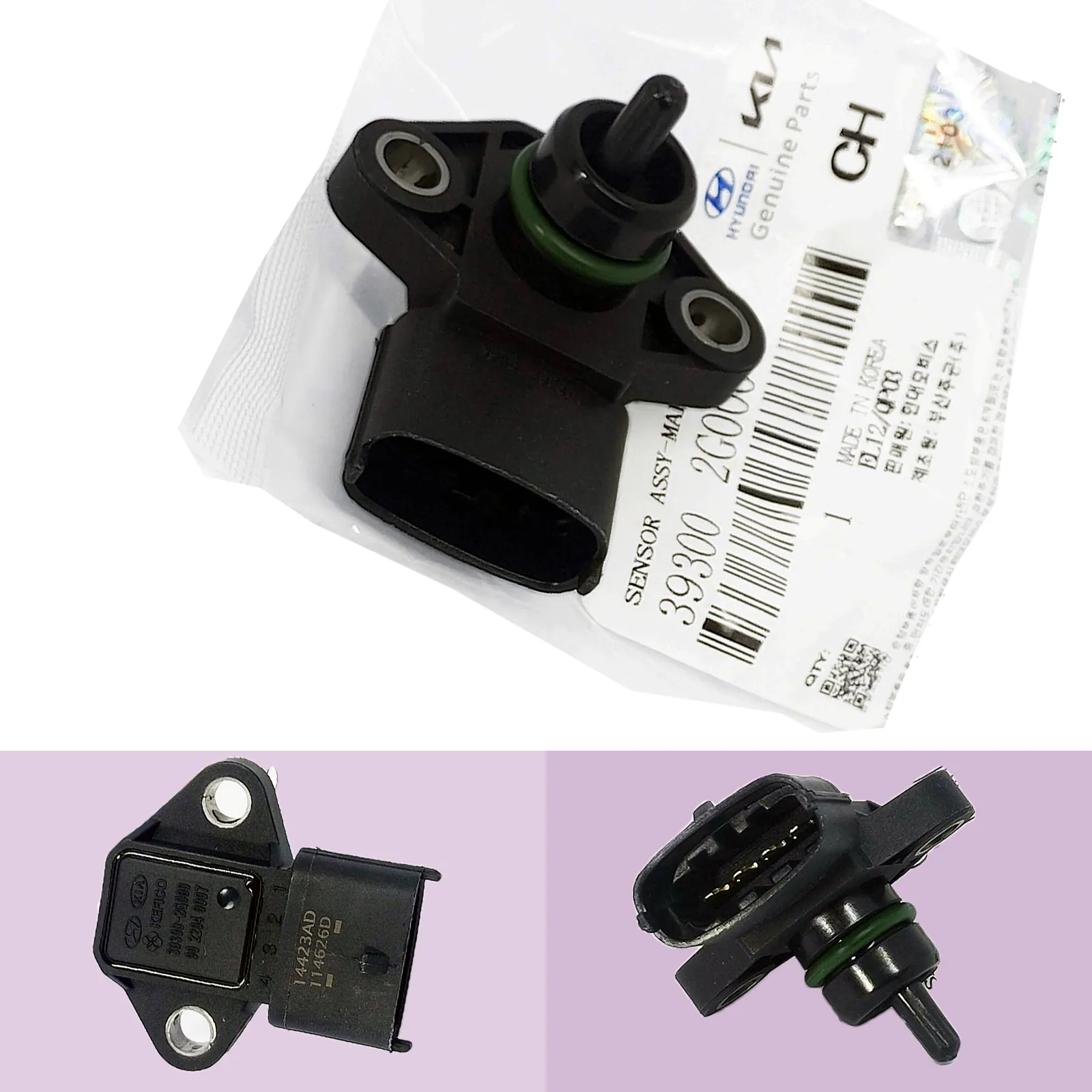
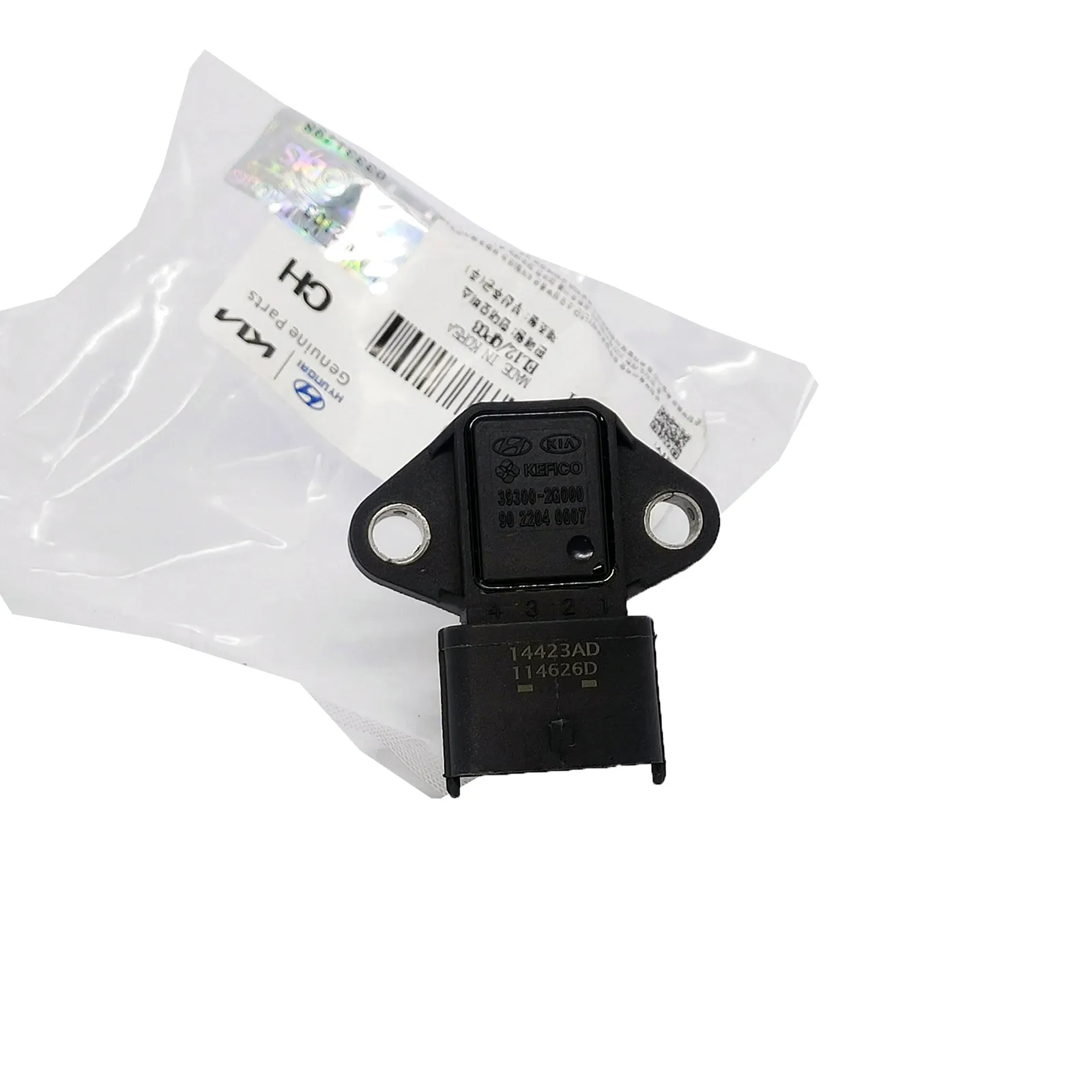
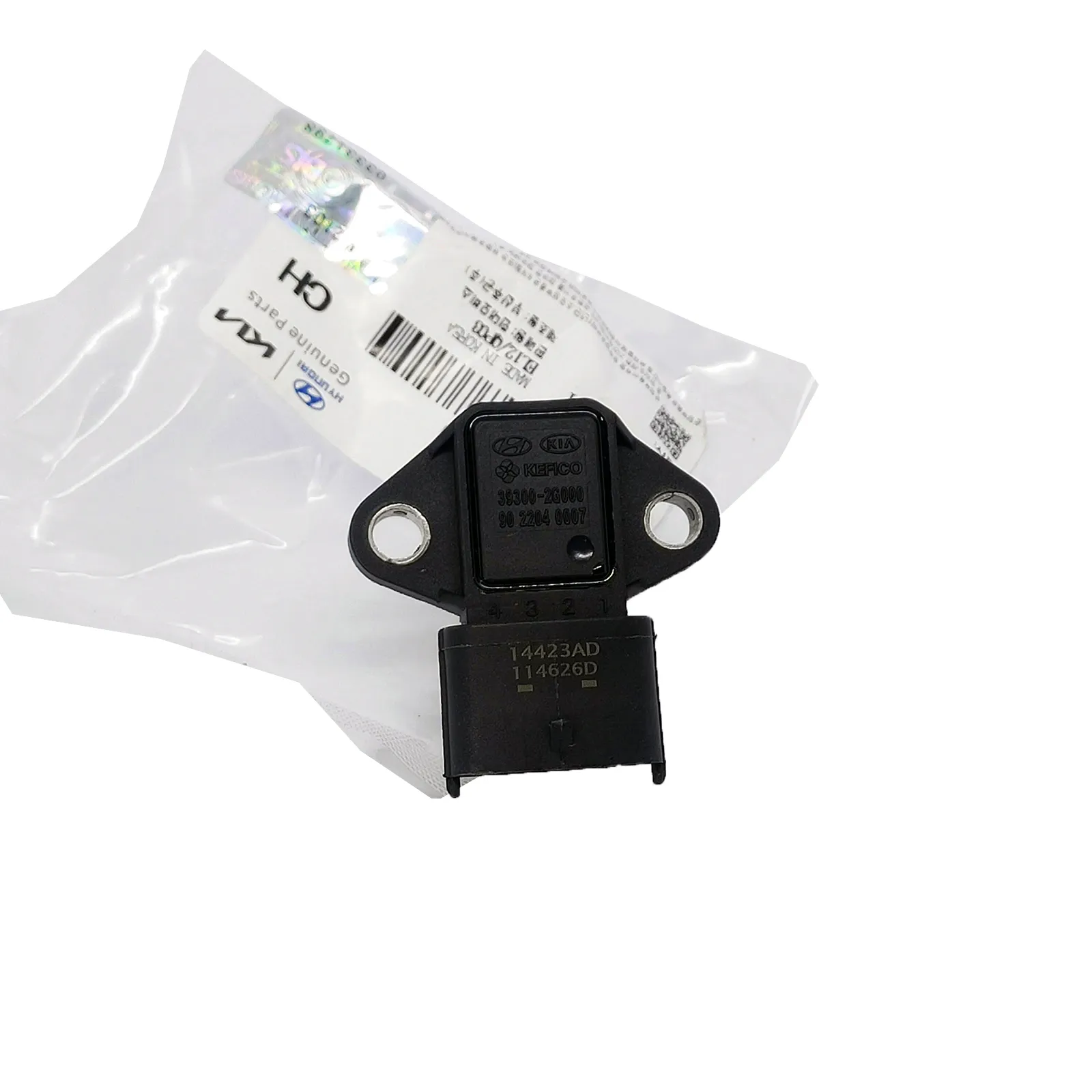
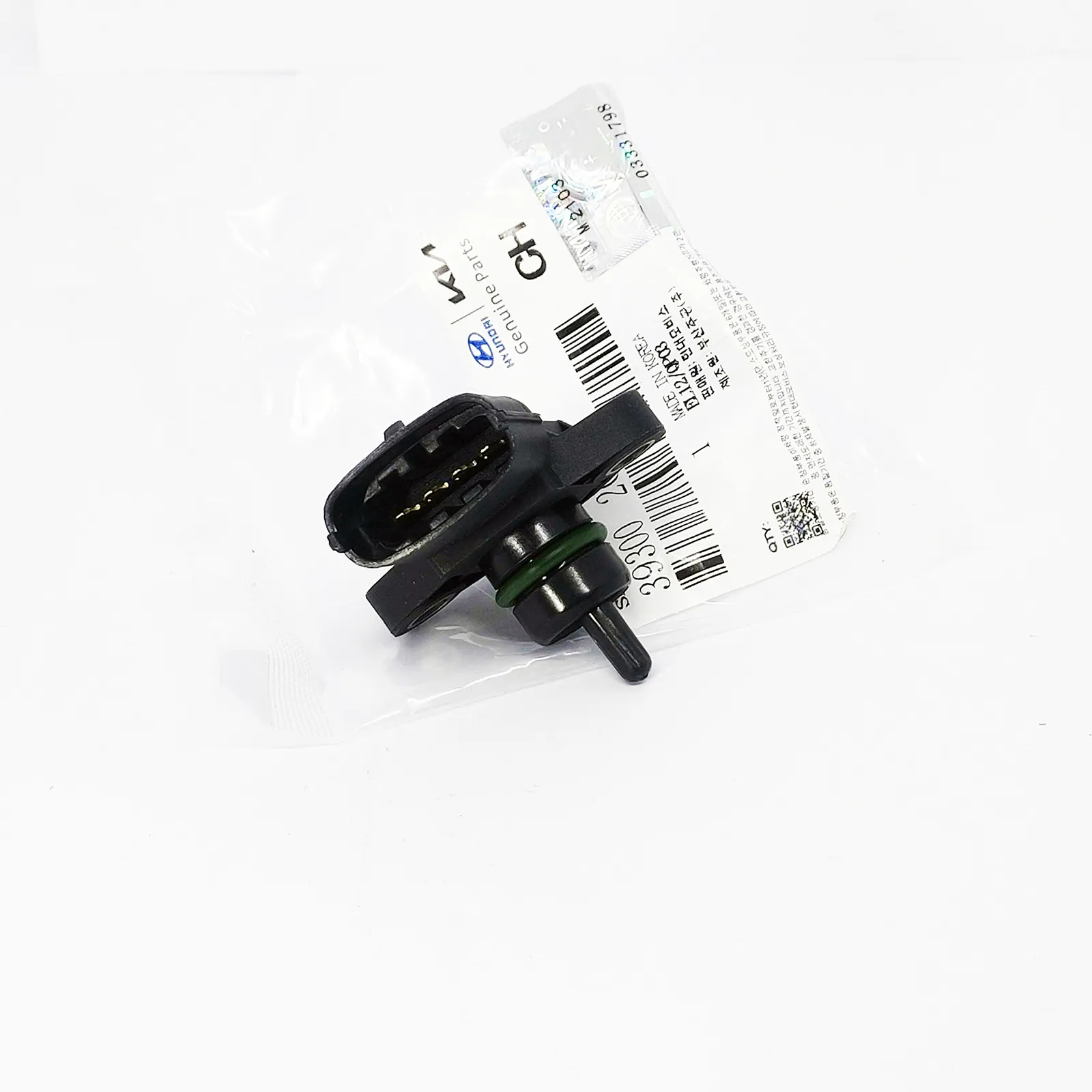
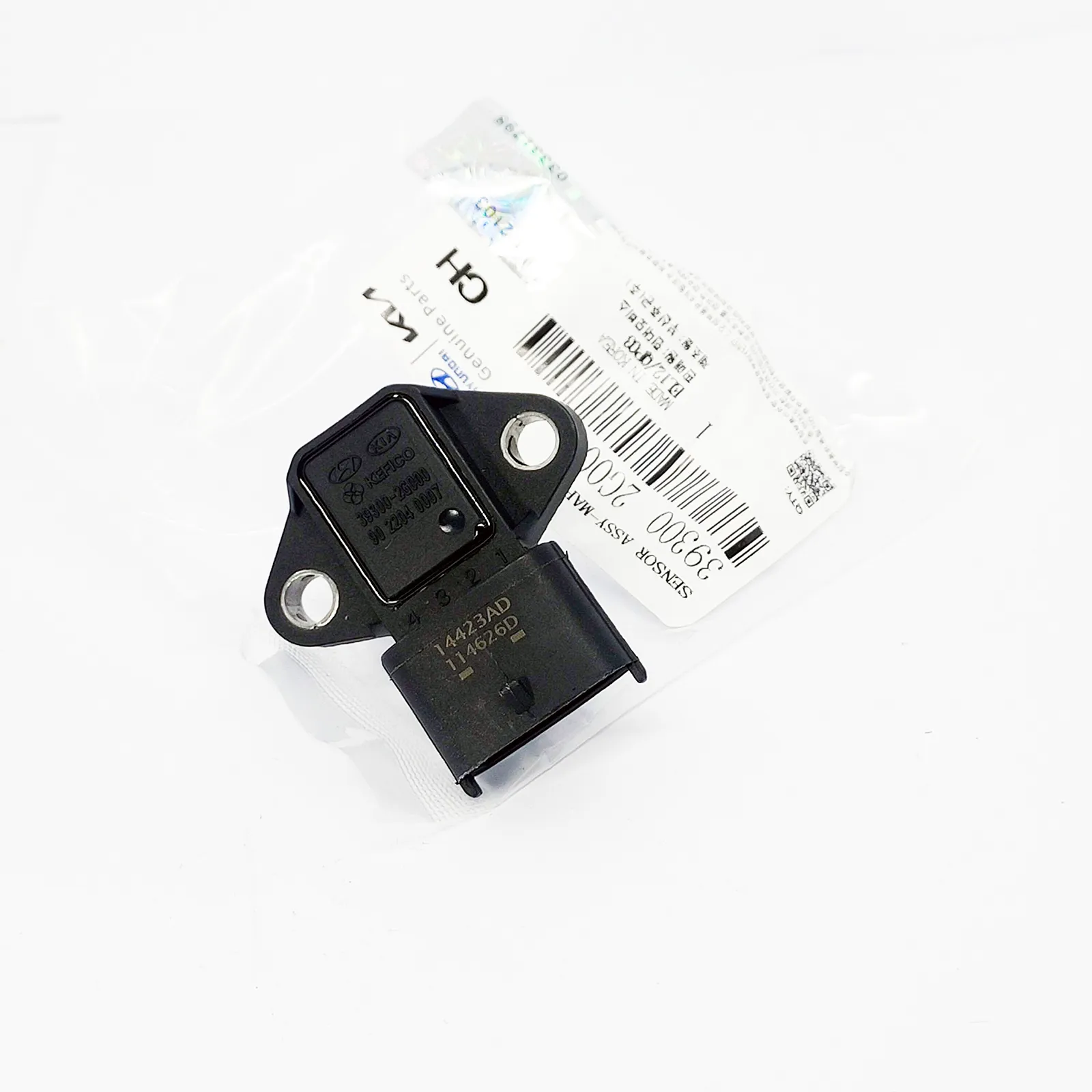
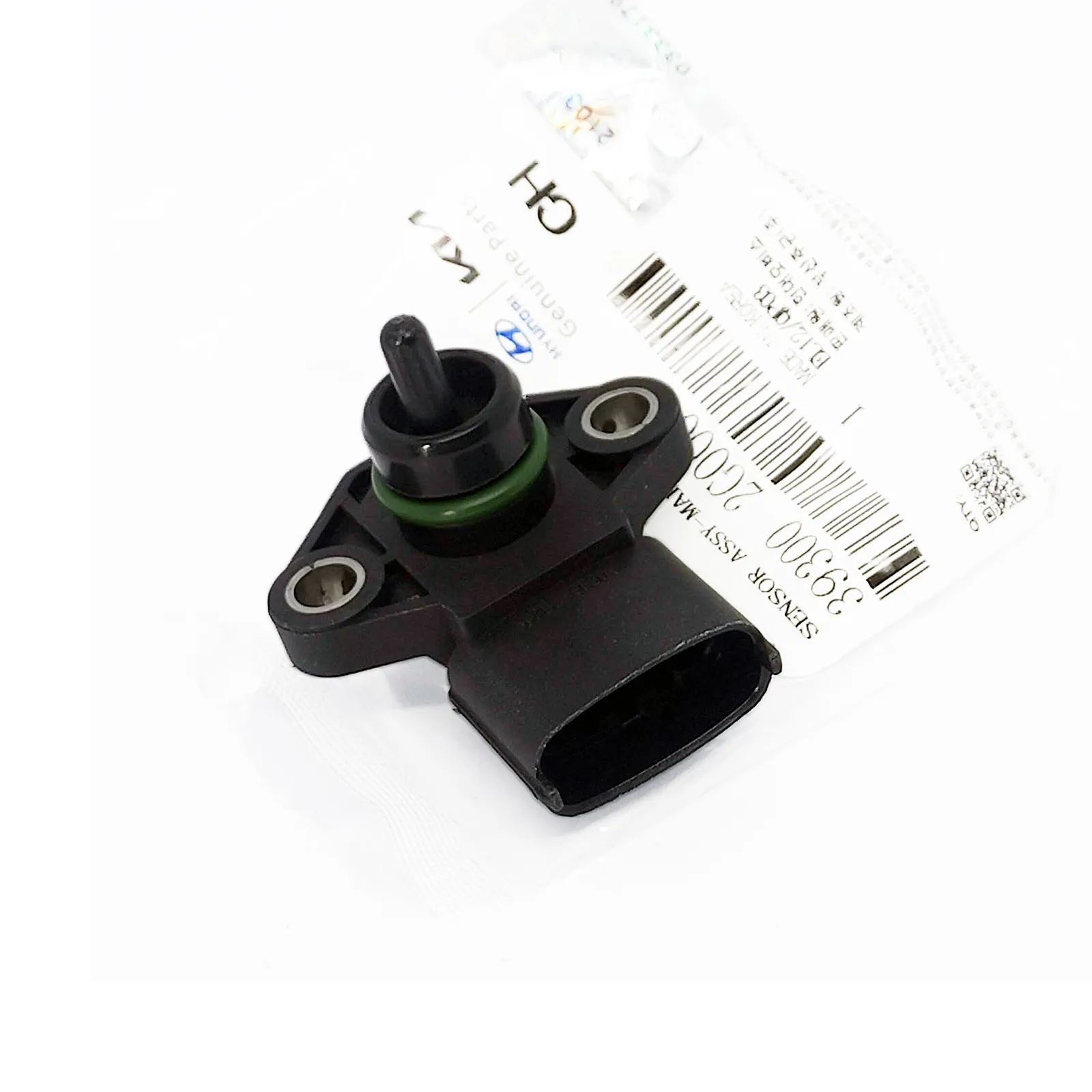

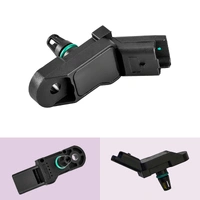
MAP Sensor 39300-2G000 for Hyundai i30 i40 Elantra Tucson Kia Cerato Stinger
Direct Fit Replaces 39300-2G000
BRAND NEW *OEM Quality* 2 bar turbo boost pressure sensor with integrated air temperature sensor to suit a wide range of Hyundai and Kia turbo petrol and CRDi diesel engines.
When this sensor drifts the ECU loses its boost reference and pulls timing, leaving the car flat under load and drinking fuel. This is a direct replacement that restores accurate boost monitoring, dispatched same-day from Cranbourne VIC.
TO SUIT
Fits the intercooler outlet pipe across the Hyundai and Kia turbo range - the D4FB and D4FD CRDi diesels in the Accent RB, i30 FD and GD, i40 VF and Rondo RP, the G4FJ T-GDi petrol in the Elantra AD, Kona OS, Tucson TL, Veloster FS, Cerato BD and Seltos SP2, and the larger G4KH and G4KL turbo units in the i30 N, Sonata LF, Optima JF and Stinger CK. Full build date coverage is in the compatibility chart on this page.
FITMENT CHECK
This is a 2 bar BOOST pressure sensor for turbocharged engines. Hyundai and Kia use a very similar looking 4-pin oval sensor with the same two bolt holes on naturally aspirated engines under part number 39300-22600 - that is a 1 bar manifold sensor. It will bolt straight up but it is calibrated for a completely different pressure range and will report incorrect boost.
This sensor mounts on the intercooler outlet pipe and does not replace the sensor bolted directly to the inlet manifold. Check both the location and the part number on your original before ordering.
OEM PART NUMBERS
- 39300-2G000
- 39300-84400
- 9022040007
- 9491103001
OTHER PART NUMBERS
- VEMO: V52-72-0136
- NTK-AU: EPBMPT4-V014Z
- HELLA: 6PP 358 152-211
- DELPHI: PS10152
- ERA: 551110
- WALKER PRODUCTS: 225-1274
PACKAGE INCLUDES
1 x 2 bar turbo boost pressure sensor with integrated air temperature sensor, 4-pin oval connector and two mounting bolt holes. Mounting screws are not included - reuse the originals.
ABOUT THIS SENSOR
Mounted after the intercooler, this sensor reports charge air pressure and temperature to the ECU so it can calculate the true density of the air reaching the cylinders and set fuelling and boost accordingly. The 2 bar range lets it read positive boost above atmospheric pressure, which a standard manifold sensor cannot do.
Because it sits downstream of the intercooler it runs through constant heat cycling, and the pressure element drifts before it fails outright. The ECU keeps trusting the wrong number, so the first thing owners notice is soft throttle response under boost and fuel economy sliding, rather than a warning light.
COMMON SYMPTOMS OF FAILURE
- Check engine light with P0105 P0106 P0107 or P0108 stored
- Flat or hesitant acceleration once the turbo comes on boost
- Noticeably worse fuel economy with no other fault found
- Engine running rich or lean at part throttle
- Intermittent limp mode that clears on restart
- [11/10 - 12/17] HYUNDAI ACCENT RB IV CRDi (1.6L 4cyl D4FB Euro 4 94kW)
- [02/16 - 07/20] HYUNDAI ELANTRA AD / ADA VI SR Turbo (1.6L 4cyl G4FJ 150kW)
- [06/06 - 10/10] HYUNDAI GRANDEUR TG CRDi (2.2L 4cyl D4EB 114kW)
- [02/12 - 10/21] HYUNDAI H-1 / iLOAD TQ CRDi (2.5L 4cyl D4CB Euro 4/Euro 5/Euro 6 100kW)
- [02/08 - 10/21] HYUNDAI H-1 / iLOAD TQ CRDi (2.5L 4cyl D4CB Euro 4/Euro 5/Euro 6 125kW)
- [02/12 - 10/21] HYUNDAI H-1 / iMAX TQ CRDI (2.5L 4cyl D4CB Euro 4/Euro 5/Euro 6 100kW)
- [05/08 - 10/21] HYUNDAI H-1 / iMAX TQ CRDi (2.5L 4cyl D4CB Euro 4/Euro 5/Euro 6 125kW)
- [03/21 ON] HYUNDAI i30 CN7 VII N (2.0L 4cyl G4KH Euro 4 206kW)
- [02/08 - 06/12] HYUNDAI i30 FD CRDi (1.6L 4cyl D4FB Euro 4 85kW)
- [06/12 - 01/16] HYUNDAI i30 GD CRDi (1.6L 4cyl D4FB Euro 4 100kW)
- [12/11 - 12/15] HYUNDAI i30 GD CRDi (1.6L 4cyl D4FB Euro 4 94kW)
- [07/17 - 07/20] HYUNDAI i30 PD / PDE / PDEN N (2.0L 4cyl G4KH Euro 4 202kW)
- [03/21 ON] HYUNDAI i30 PD / PDE / PDEN N (2.0L 4cyl G4KH Euro 4 206kW)
- [11/16 ON] HYUNDAI i30 PD / PDE / PDEN T-GDi (1.6L 4cyl G4FJ 150kW)
- [11/17 - 07/20] HYUNDAI i30 PDE / PDEN N (2.0L 4cyl G4KH Euro 4 202kW)
- [03/12 - 12/15] HYUNDAI i40 VF I CRDi (1.7L 4cyl D4FD 100kW)
- [01/15 - 12/18] HYUNDAI i40 VF I CRDI (1.7L 4cyl D4FD 104kW)
- [07/21 - 03/23] HYUNDAI KONA OS / OSE / OSI N (2.0L 4cyl G4KH Euro 4 206kW)
- [06/17 - 03/23] HYUNDAI KONA OS / OSE / OSI T-GDi (1.6L 4cyl G4FJ 130kW)
- [11/06 - 10/09] HYUNDAI SANTA FE CM II CRDi (2.2L 4cyl D4EB 114kW)
- [09/14 - 12/19] HYUNDAI SONATA LF VII (2.0L 4cyl G4KH Euro 4 180kW)
- [03/09 - 12/10] HYUNDAI SONATA NF V CRDi (2.0L 4cyl D4EA 110kW)
- [06/15 - 12/20] HYUNDAI TUCSON TL / TLE T-GDi (1.6L 4cyl G4FJ 130kW)
- [08/12 - 12/17] HYUNDAI VELOSTER FS T-GDI (1.6L 4cyl G4FJ 150kW)
- [04/18 ON] KIA CERATO BD / BDM IV T-GDI (1.6L 4cyl G4FJ 150kW)
- [12/13 - 03/16] KIA CERATO KOUP YD III T-GDI (1.6L 4cyl G4FJ 150kW)
- [09/15 - 12/19] KIA OPTIMA JF T-GDi (2.0L 4cyl G4KH Euro 4 180kW)
- [06/13 - 11/15] KIA PRO CEED JD GT (1.6L 4cyl G4FJ 150kW)
- [06/11 - 12/17] KIA RIO UB III (1.6L 4cyl G4FD Euro 4 103kW)
- [09/11 - 11/16] KIA RIO UB III CVVT (1.4L 4cyl G4FA Euro 4 79kW)
- [06/12 - 11/16] KIA RIO UB III CVVT (1.6L 4cyl G4FC Euro 4 90kW)
- [03/13 - 06/15] KIA RONDO RP IV CRDi (1.7L 4cyl D4FD Euro 5/Euro 6 100kW)
- [09/19 - 06/22] KIA SELTOS SP2 T-GDi (1.6L 4cyl G4FJ 130kW)
- [08/07 - 09/09] KIA SORENTO JC I CRDi (2.5L 4cyl D4CB Euro 4 125kW)
- [02/09 - 12/14] KIA SOUL AM I CRDi 128 (1.6L 4cyl D4FB Euro 4 94kW)
- [01/06 - 08/10] KIA SPORTAGE JE KM II CRDi (2.0L 4cyl D4EA Euro 3 103kW)
- [01/17 ON] KIA STINGER CK (2.0L 4cyl G4KL 182kW)
- [06/17 ON] KIA STINGER CK T-GDI (2.0L 4cyl G4KL 182kW)
What fault codes does a faulty MAP sensor trigger?
A faulty MAP sensor typically triggers codes P0105 to P0109. P0105 indicates a circuit malfunction, P0106 indicates the signal is out of range, P0107 and P0108 indicate the signal is too low or too high respectively, and P0109 indicates an intermittent circuit fault. These codes combined with symptoms such as poor idle and black smoke are strong indicators of MAP sensor failure.
How do I test a MAP sensor?
With an OBD2 scanner in live data mode, the MAP sensor should read close to atmospheric pressure (around 101 kPa) with the engine off, and drop to 30 to 50 kPa at idle with the engine running due to manifold vacuum. Under wide open throttle the reading should rise back toward atmospheric. A sensor that reads flat or does not respond to throttle changes has failed. You can also test supply voltage and signal output with a multimeter.
Can I drive with a faulty MAP sensor?
You can drive short distances but engine performance will be noticeably degraded. The ECU uses the MAP sensor to calculate fuel delivery - a faulty sensor causes incorrect fuelling which leads to poor economy, rough running, and increased emissions. On turbocharged engines a faulty MAP sensor can also prevent boost control from operating correctly. Replace it as soon as possible to avoid further damage.
What does a MAP sensor do?
The Manifold Absolute Pressure (MAP) sensor measures intake manifold pressure to help the ECU calculate the correct fuel and ignition timing. It is critical for engine efficiency, particularly on turbocharged and supercharged vehicles.
What are the symptoms of a faulty MAP sensor?
Symptoms include poor acceleration, rough idle, excessive fuel consumption, black smoke, engine hesitation, and a Check Engine light with codes P0105-P0109. Turbocharged vehicles may also experience boost control issues.
What is the difference between a MAP sensor and a MAF sensor?
A MAF (Mass Air Flow) sensor directly measures the mass of air entering the engine. A MAP sensor measures manifold pressure and the ECU calculates air mass from that reading. Many vehicles use one or the other; some use both. They are not interchangeable.
| Identification | |
|---|---|
| SKU | 393002G000-CMS302 |
| Brand | Aftermarket OEM Replacement |
| Part Numbers | |
| Part Number | CMS302 |
| Reference OEM Number | 39300-2G000 |
| Other OEM Numbers | 39300-2G000, 39300-84400, 393002G000, 9022040007 |
| Related Part Numbers | CMS302, MP156GEN, MP156, TMP042, DMAP1007 |
| Trade Part Numbers | VEMO: V52-72-0136, NTK-AU: EPBMPT4-V014Z, HELLA: 6PP 358 152-211 |
| Product Specifics | |
| Product Type | SENSOR |
| Sensor Type | Boost Pressure Sensor |
| Fitting Position | Intercooler outlet pipe |
| Number of pins | 4-Pin |
| Connector Shape | oval |
| Supplementary Article Info | with integrated air temperature sensor |
| Pressure Range | 2 bar (up to 200 kPa) |
| Number of mounting bores | 2 |
| Compatible Makes | Hyundai Kia |
| Fitment Type | Direct Replacement |
| Other Details | |
| Note | 2 bar boost sensor - 2 bolt holes - not the 1 bar type |
Be The First To Review This Product!
Help other SENSORGAL LTD. users shop smarter by writing reviews for products you have purchased.
More From This Category
$98.00 RRP $149.97
Boost Pressure MAP Sensor BMW 640i 650i F06 F12 F13 Alpina B4 13627585493
SKU: MAP1193-MP257_4
$99.97 RRP $119.97

$119.97 RRP $146.95
$176.46 RRP $299.40
$119.97 RRP $146.95
MAP Sensor for Ford Focus LT LV Mondeo MA MB MC 2.0L Diesel 07-15
SKU: CMS244-Ford
$71.97 RRP $137.97
Brake Pressure Sensor 036906051G for Skoda Fabia Octavia Rapid Yeti
SKU: CMS245-Skoda
$100.00 RRP $100.32
MAP Sensor for Citroen Berlingo C2 C3 C4 C5 Picasso Xsara 9639381480
SKU: MP149-0261230043_1
$89.97 RRP $147.97