35% OFF
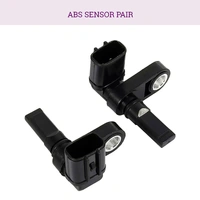
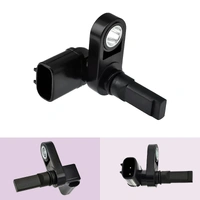
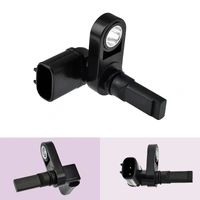
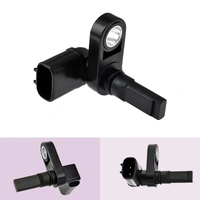
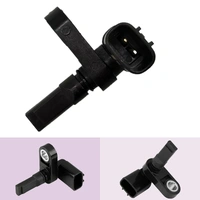
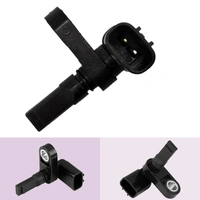
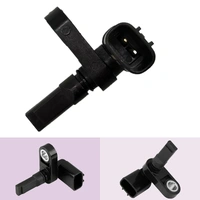
2 X Rear ABS Sensor for Toyota Landcruiser VDJ 4.5L V8 1VDFTV 2007-ON
SKU: WSS232_WSS248_PAIR
$297.97 RRP $460.97
Save $163.00
Shop OEM replacement ABS wheel speed sensors for Toyota, Holden, Ford, Mitsubishi, Nissan, Hyundai, Kia, BMW, Mazda and more. Matched to OEM specifications for correct ABS and traction control operation. Use the Vehicle Part Finder to confirm fitment.
2 X Rear ABS Sensor for Toyota Landcruiser VDJ 4.5L V8 1VDFTV 2007-ON
SKU: WSS232_WSS248_PAIR
$297.97 RRP $460.97
$69.95 RRP $149.00
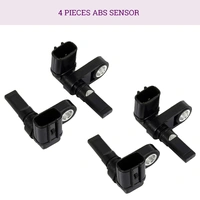
4 Pack X ABS Sensor for Landcruiser (Vdj Kdj Uzj Grj) 1VDFTV 1GRFE 1KDFTV 1URFE
SKU: WSS232_WSS248_4PACK
$529.97 RRP $820.00
$179.97 RRP $232.99
$179.97 RRP $232.99
$179.97 RRP $232.99
$179.97 RRP $232.99
$179.97 RRP $232.99
$179.97 RRP $232.99
$39.95 RRP $97.00
$39.95 RRP $97.00
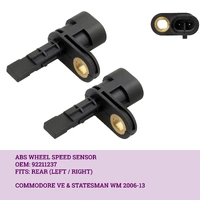
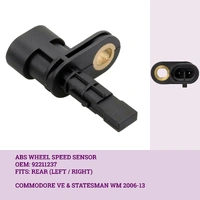
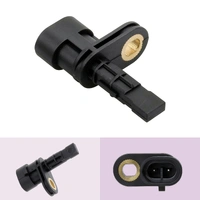
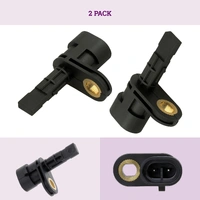
Rear ABS Wheel Speed Sensor Pair for Holden VE Commodore V6 & V8 (2006-2013)
SKU: FSS241-2PACK_3
$69.95 RRP $149.00
$89.79 RRP $127.00
$89.79 RRP $127.00
$89.79 RRP $127.00
$154.99 RRP $307.00
The ABS wheel speed sensor monitors the rotational speed of each wheel and sends this data to the ABS control module. The module uses the speed data from all four wheels to detect when a wheel is locking up during braking and rapidly modulates brake pressure on that wheel to maintain steering control. Wheel speed sensors also feed data to traction control, stability control, and cruise control systems - making them one of the most safety-critical sensors on the vehicle.
A faulty ABS wheel speed sensor is usually detected immediately by the ABS module. Common symptoms include:
ABS wheel speed sensors vary in sensor technology (passive inductive vs active Hall effect), connector type, cable length, and mounting configuration between makes, models, and wheel positions (front vs rear). Every sensor in our range is cross-referenced against OEM part numbers for the correct wheel position and vehicle application. Use the Vehicle Part Finder to confirm fitment before ordering.
SensorGal is a 100% Australian owned family business stocking aftermarket OEM replacement ABS wheel speed sensors for Toyota, Holden, Ford, Mitsubishi, Nissan, Hyundai, Kia, BMW, Mazda, Subaru, Mercedes-Benz and Suzuki. Orders placed before 12 noon are dispatched same day from our Cranbourne VIC warehouse via express post. All parts carry a 1-Year Australian warranty and our no-fuss returns policy.
The ABS wheel speed sensor monitors the rotational speed of each wheel and sends this data to the ABS control module. The module uses speed data from all four wheels to detect when a wheel is locking up during braking and rapidly modulates brake pressure to restore rolling traction and maintain steering control. Wheel speed sensors also provide data to traction control, stability control, and cruise control systems - making them among the most safety-critical sensors on the vehicle.
Common symptoms include the ABS warning light on the dashboard, traction control or stability control warning lights, ABS activating during normal braking on dry roads as the module receives incorrect speed data, the speedometer reading incorrectly or not at all on some vehicles, and cruise control not engaging. Fault codes stored in the ABS module will identify which wheel position has the faulty sensor.
You can drive but with caution - the standard braking system will continue to work normally without ABS. However in an emergency stop on a slippery surface, the wheels may lock and you will lose steering control without ABS assistance. Traction control and stability control will also be disabled on most vehicles when the ABS warning light is on. Replace the faulty sensor as soon as possible to restore full braking system function.
An OBD2 scanner with ABS module access will display fault codes specifying the exact wheel position - left front, right front, left rear, or right rear. Without a scanner you can sometimes identify a faulty sensor by inspecting the sensor and reluctor ring (the toothed ring the sensor reads) for damage, corrosion, or debris. The sensor air gap can also be checked with a feeler gauge on passive inductive sensors.
A passive (inductive) sensor generates its own voltage signal by detecting changes in a magnetic field as the toothed reluctor ring passes it. It has two wires and requires no power supply. An active (Hall effect) sensor requires a power supply and produces a digital on/off square wave signal. Active sensors are more accurate at low speeds and are used on most vehicles from the 2000s onward. The two types are not interchangeable - use the Vehicle Part Finder to confirm the correct sensor type for your vehicle.
Yes. The reluctor ring is the toothed ring that the ABS sensor reads - typically pressed onto the wheel hub, CV shaft, or brake disc. If the ring is cracked, has missing teeth, or is heavily corroded, it will produce an inconsistent signal that the ABS module interprets as a wheel speed fault. The fault code may point to the sensor but the actual cause is the reluctor ring. Always inspect the reluctor ring when diagnosing ABS wheel speed sensor faults.